
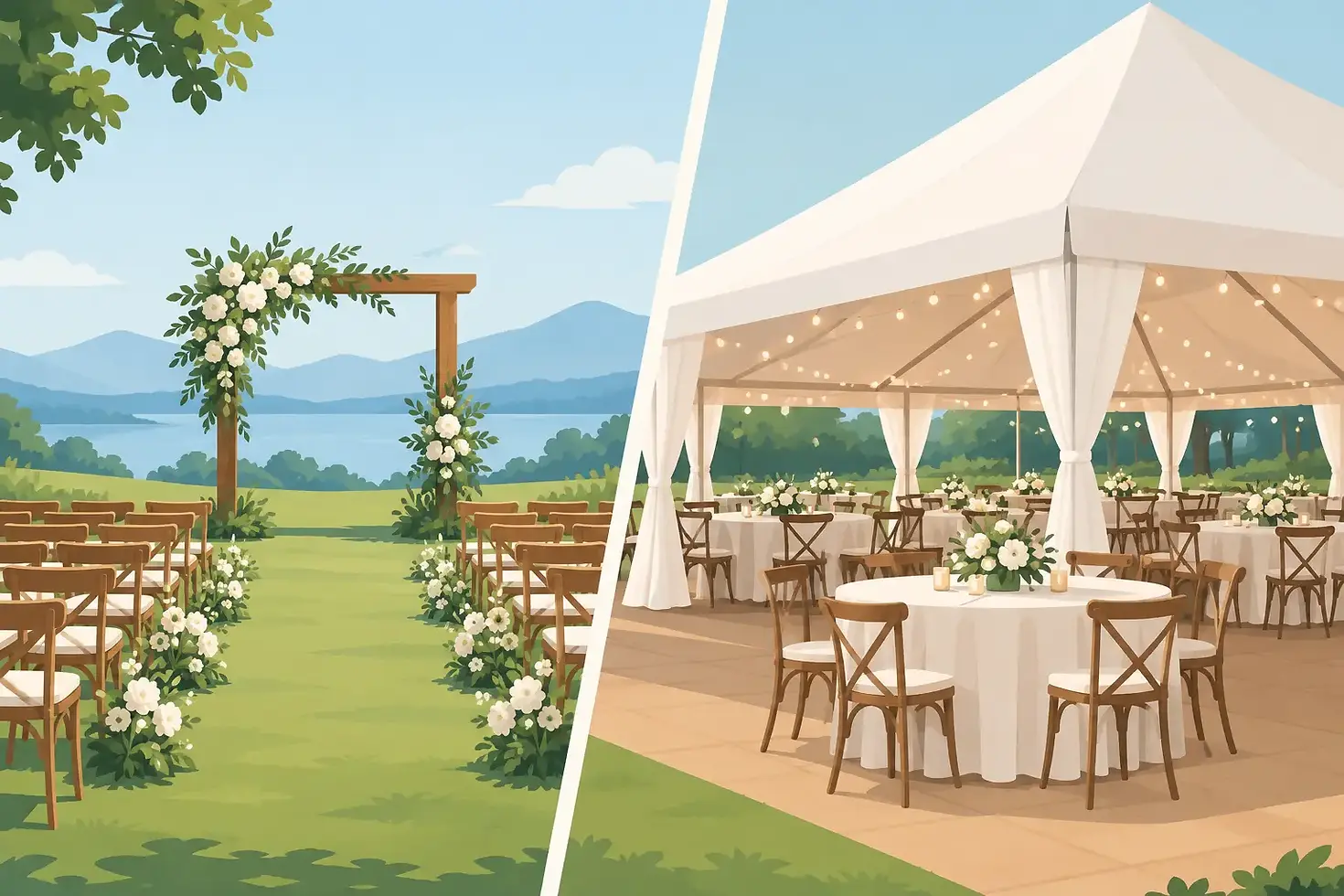
Outdoor Ceremony vs Tented Reception: Which Fits?
A mountain wedding can begin with vows beside a river and continue beneath a glowing canopy of café lights, all without losing the feeling that brought you to Colorado in the first place. When considering an outdoor ceremony vs tented reception, the most meaningful choice is rarely about choosing nature or comfort. It is about deciding how you want your guests to experience the landscape, the celebration, and every transition between them.
At a ranch setting, these two spaces can work beautifully together. An open-air ceremony gives the moment room to breathe, while a tented reception creates a polished home for dinner, dancing, and the unexpected shift in mountain weather. The right balance depends on your season, guest count, priorities, and the kind of evening you want to remember.
Outdoor Ceremony vs Tented Reception: The Core Difference
An outdoor ceremony places the natural setting at the center of the experience. The mountains become your backdrop, the river provides its own quiet soundtrack, and the landscape brings a sense of scale that décor alone cannot create. For couples drawn to Colorado for its dramatic scenery, this is often the emotional heart of the day.
A tented reception offers a different kind of magic. It still lets guests feel connected to the ranch, meadow, or mountain views, but it adds shape, shelter, and a clear sense of occasion. With thoughtful lighting, draping, florals, and a well-designed floor plan, a tent can feel intimate and elevated rather than enclosed.
The distinction matters because ceremonies and receptions ask different things of a space. Your ceremony is brief, focused, and visually driven. Your reception lasts for hours and must support meals, toasts, dancing, conversation, service, and guest comfort. Many couples find that the most natural answer is not either-or: it is an outdoor ceremony followed by a tented reception designed for a beautiful, flexible evening.
Why an Outdoor Ceremony Feels So Personal
There is a reason couples travel to the Rockies to exchange vows. A ceremony surrounded by water, wild grass, towering peaks, or a quiet grove has an unmistakable sense of place. The setting does not compete with the moment. It gives the moment weight.
Outdoor ceremonies also photograph beautifully. Natural light, open views, and a ceremony aisle that leads toward the landscape can create imagery that feels timeless rather than overly staged. At the same time, the best ceremony location considers more than the view. Guests need a clear path to their seats, a comfortable sightline, and enough shade or warmth for the season.
Timing is especially important in Colorado. A late-afternoon ceremony may offer softer light and cooler temperatures in summer, while an earlier start can make the most of a shorter fall day. Wind, sun direction, and the possibility of a passing shower deserve as much attention as the floral palette. A seasoned venue team can help you choose a location and timeline that honor both the scenery and the practical details.
What a Tented Reception Adds to the Celebration
A tent is not a backup plan for the outdoors. It is a reception setting with its own atmosphere and advantages. It defines the celebration while keeping the landscape close, whether guests are looking through open tent sides at the mountains or stepping outside for a breath of cool evening air.
Most importantly, a tent gives your reception a dependable center. Your caterer has a protected service area. Your band or DJ has a designated place to build the energy of the evening. Older guests, young children, and anyone sensitive to direct sun or changing temperatures have a more comfortable place to settle in. If the weather changes, the celebration does not have to lose its rhythm.
A tent also gives couples greater creative range. Long farm tables can feel warm and communal under strings of lights. Round tables may create a more traditional dinner experience. A dramatic floral installation, a refined lounge area, or a generous dance floor can all be planned around the tent's dimensions rather than improvised in an open field.
The key is to treat the tent as part of the design from the beginning. Flooring, lighting, sidewalls, heaters, fans, power, restrooms, and rain plans should be considered early. These details are not the glamorous part of wedding planning, but they are often what make the evening feel effortless to guests.
Let Your Guest Experience Lead the Decision
When couples picture their wedding day, they naturally picture the views, the vows, and the first dance. It is equally useful to picture the experience from a guest's perspective. Where will they park? How far will they walk? Where will they set down a drink during cocktail hour? What happens if temperatures drop after sunset?
A well-planned outdoor ceremony followed by a tented reception can create an easy, intentional flow. Guests arrive to a breathtaking view, gather for the ceremony, move into a scenic cocktail hour, then enter a reception space that feels welcoming and celebratory. Each part of the day has a distinct mood, yet the entire experience remains connected to the property.
For destination weddings, this matters even more. Guests may be unfamiliar with mountain weather and elevation. A thoughtful hospitality plan can include water stations, clear footwear guidance, shaded gathering areas, blankets for a cool evening, and transportation considerations. These small gestures communicate care and help everyone relax into the occasion.
If your guest list includes many older relatives or very young children, a tented reception may be particularly valuable. It offers a more predictable environment without sacrificing the sense of being outdoors. If your group is smaller and eager for a relaxed, nature-forward celebration, you may choose a more open format with fewer built elements. Neither approach is more romantic. They simply create different kinds of comfort.
Weather Planning Without Losing the Romance
Colorado weather has personality. A bright afternoon can give way to wind, a quick rain shower, or a crisp temperature drop once the sun slips behind the peaks. Planning for those possibilities is not pessimistic. It is how you protect the feeling of the day.
A tent gives you a ready answer to rain and strong sun, but its effectiveness depends on the details. Sidewalls can be useful in wind or rain, yet they may change the visual feel and airflow. Heaters can extend the comfort of spring and fall celebrations, while fans and open sides can make a summer event more pleasant. Your rental and venue teams should discuss these choices based on the month, elevation, and reception schedule.
A ceremony backup plan should also be clear before invitations are sent. Ideally, it feels like a second beautiful option rather than a compromise. At Shaw's River Ranch, the appeal of a ranch wedding lies in having meaningful spaces that can support the day as it unfolds, from scenic outdoor vows to an evening designed around guest comfort.
How to Choose the Right Format for Your Wedding
Start with the feeling you want at the end of the night. If you imagine guests dining beneath a soft canopy of lights, lingering over dessert, and dancing while mountain air moves through the tent, a tented reception may be the right foundation. If you picture an intimate gathering where the landscape does most of the decorating, a more open celebration may suit you beautifully.
Then consider the practical boundaries: your guest count, your budget, the season, and your willingness to invest in weather protection and infrastructure. Tents can be transformative, but they involve more than the tent itself. The most successful plans account for rentals, lighting, power, flooring, climate comfort, and service needs from the outset.
Finally, remember that the ceremony and reception do not need to make the same design statement. You can keep your vows beautifully simple and expansive outdoors, then create a reception that feels layered, warm, and protected. That contrast often makes the day feel more dynamic: open sky for the promises, a glowing gathering place for the celebration that follows.
The best way to decide is to stand in the spaces you are considering at the time of day you hope to marry. Notice the light, the breeze, the distance between moments, and the view your guests will carry with them. A setting that feels right in person will help you create a wedding day that is as comfortable as it is unforgettable.


Comments