
Outdoor Wedding Rain Backup Ideas That Feel Magical
A mountain wedding can begin beneath clear blue skies and shift into a silver afternoon in a matter of minutes. That possibility is part of the romance of celebrating outdoors, but it should never leave you or your guests wondering what happens next. The best outdoor wedding rain backup ideas do more than keep everyone dry. They protect the feeling you worked so carefully to create.
At a nature-forward celebration, rain planning is not a sign that you expect a disappointing day. It is an act of hospitality. With the right spaces, timing, and team in place, a passing shower can become part of the story - a candlelit gathering, mist rising over the mountains, and portraits that feel entirely your own.
Start With a Plan That Feels Like a Second Choice Only on Paper
A rain plan works best when it is built alongside the original vision, not added during the final week of planning. Ask your venue early which covered spaces are available for the ceremony, cocktail hour, dinner, and dancing. A single indoor room may be enough for an intimate wedding, while a larger guest count may need an entirely different flow.
The goal is not to reproduce every detail of an open-meadow ceremony indoors. It is to create a setting with its own charm. A lodge with warm wood, windows framing the landscape, and room for floral arrangements can feel intimate and elevated in a way a wide-open field cannot. A covered pavilion can preserve the fresh air and the sound of rain while giving guests a comfortable place to gather.
At Shaw's River Ranch, couples can consider the property as a collection of experiences rather than one fixed ceremony spot. That approach makes it easier to choose a weather alternative that still reflects the ranch, from a warm gathering at The Lodge to a celebration shaped by the property's natural views.
Choose a rain-call deadline
Weather changes quickly in Colorado, so avoid making the decision based on the first forecast you see. Set a clear deadline with your venue, planner, rental team, and caterer. For example, you might decide by the morning of the wedding whether dinner will be set outdoors or under cover, while waiting until closer to ceremony time to move a short exchange of vows.
A good deadline depends on what must be moved. Chairs, a sound system, florals, and place settings require more notice than a simple standing cocktail hour. Your planner or venue coordinator can help establish a decision point that protects your setup while leaving room for the forecast to improve.
Outdoor Wedding Rain Backup Ideas for Every Moment
Rain plans are easiest to execute when each part of the celebration has a clear home. Think through the guest experience from arrival to the final dance, rather than focusing only on the ceremony.
Create a covered ceremony with a view
A tent, pavilion, porch, or lodge-facing space can offer shelter without losing the sense of place that drew you to an outdoor wedding. Whenever possible, orient the ceremony so guests can still see the mountains, meadow, river, or trees. The view does not need to be behind your altar to matter. It can frame the aisle, appear through open sides of a tent, or become a beautiful backdrop for the recessional.
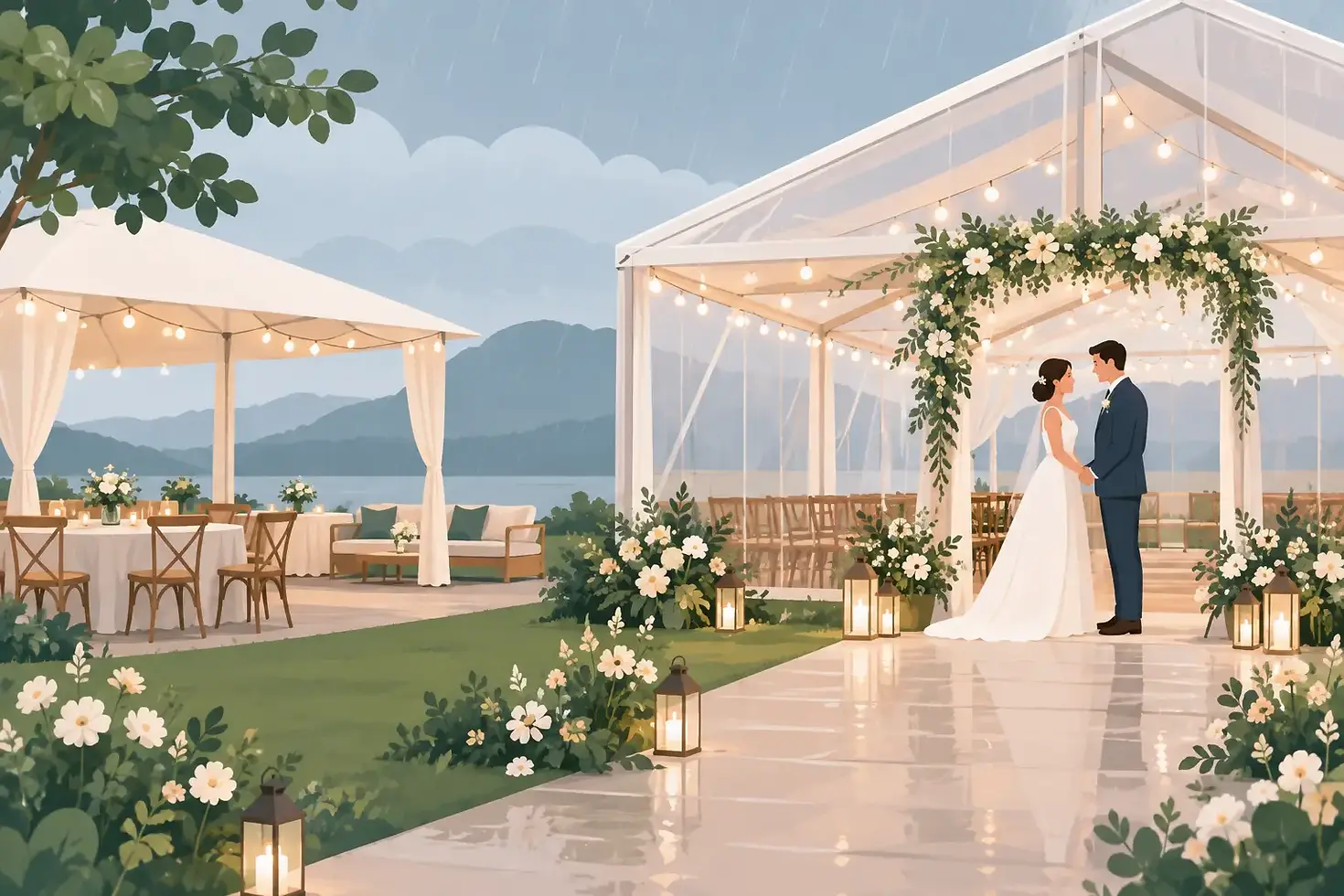
Clear-top tents are often appealing because they let in natural light and make rainfall part of the atmosphere. They are especially lovely for an evening reception with string lights, though they can feel warmer during a sunny afternoon and louder during a heavy downpour. A traditional tent with sidewalls offers greater protection from wind and cold. The best option depends on season, elevation, guest count, and how exposed the site is.
Give cocktail hour its own shelter
Cocktail hour is where a loose rain plan can become uncomfortable. Guests are standing, holding drinks, greeting one another, and often waiting while the wedding party takes photographs. Reserve an indoor room, covered deck, or tented area specifically for this portion of the day.
Add a few lounge groupings, high-top tables, and a visible bar so the space feels intentional rather than crowded. If the weather is chilly, serve something warming alongside your signature drinks, such as cider, hot chocolate, or a seasonal cocktail. Small comforts make a meaningful difference when guests arrive from damp grass or a brisk mountain breeze.
Keep dinner dry, warm, and unhurried
For dinner, prioritize comfort over maintaining an outdoor layout at all costs. A protected reception space needs reliable lighting, solid flooring, enough room for service staff, and a practical plan for heating if temperatures drop. If you are using a tent, ask about sidewalls, heaters, power, and weight-bearing options appropriate for the ground.
Do not overlook sound. Rain on a tent roof, wind, and the hum of heaters can compete with speeches and music. A professional sound system and microphones for toasts are worthwhile investments, particularly for a larger celebration. Your guests should not have to strain to hear the words that matter most.
Make the transition part of the experience
Sometimes rain arrives between the ceremony and reception, or stops just in time for dinner. Rather than treating the movement indoors as a disruption, give it a sense of occasion. Have staff guide guests with umbrellas, play a favorite song, and welcome everyone into a space already glowing with candles and music.
When the weather clears, invite guests back outside for a sunset toast, a brief portrait session, or a sparkler send-off if conditions allow. A flexible timeline can create several distinct moods across one unforgettable evening.
Protect the Details Guests Will Notice
The most successful weather plans are often built from small, thoughtful decisions. Provide umbrellas in a simple palette that works with your wedding colors. Place towels or mats at entrances. Consider heel protectors for guests walking on grass, and make sure pathways are lit and easy to navigate after dark.
For your wedding party, choose footwear that can handle soft ground and keep a few oversized umbrellas nearby for portraits. A clear umbrella photographs beautifully without hiding faces, while a neutral umbrella can add a polished, coordinated look. Your florist may also recommend arrangements that hold up well in humidity and can be moved easily between ceremony and reception spaces.
If you are planning a destination wedding, communicate the forecast reality before guests pack. A brief note on your wedding website or welcome itinerary can suggest layers, a light rain jacket, and comfortable shoes for the property. Guests appreciate knowing how to dress for a beautiful setting that may include mountain sun, cool evenings, and unexpected showers.
Build Time Into Your Wedding Day
A rain plan needs time as much as it needs a location. Add breathing room before the ceremony in case hair, makeup, transportation, or setup takes longer than expected. Allow your photographer a flexible window for outdoor portraits rather than insisting they happen at one exact time.
Overcast skies can actually be exceptionally flattering for photography. Soft clouds reduce harsh shadows, colors appear richer, and the landscape often takes on a quiet, cinematic quality. If rain pauses for ten minutes, that can be enough time for extraordinary portraits near a riverbank, beneath the trees, or against distant peaks.
Your photographer should also have an indoor portrait option in mind. Window light, a fireplace, a covered porch, or a textured ranch wall can create images that feel warm and editorial. The point is not to force sunshine into the plan. It is to make every version of the day photograph with intention.
Let Your Team Make the Call With You
You should not be studying radar maps while getting ready to marry the person you love. Share your priorities with your planner, venue team, and key vendors well before the wedding: whether you are comfortable with a light drizzle, whether guest comfort is your first concern, and which moments you most hope to keep outdoors.
Then empower a small decision-making group. One person from the venue or planning team can monitor conditions and coordinate the shift if needed. Your caterer, DJ, florist, photographer, and rental providers should all know the backup layout before the day begins. Clear communication is what turns a weather change from a scramble into a graceful transition.
A little rain may alter the view from your ceremony chairs, but it does not lessen the promise you are making or the joy gathered around you. Choose a venue and a plan that welcome the weather with confidence, then let the day unfold with all the beauty a mountain celebration can hold.


Comments