
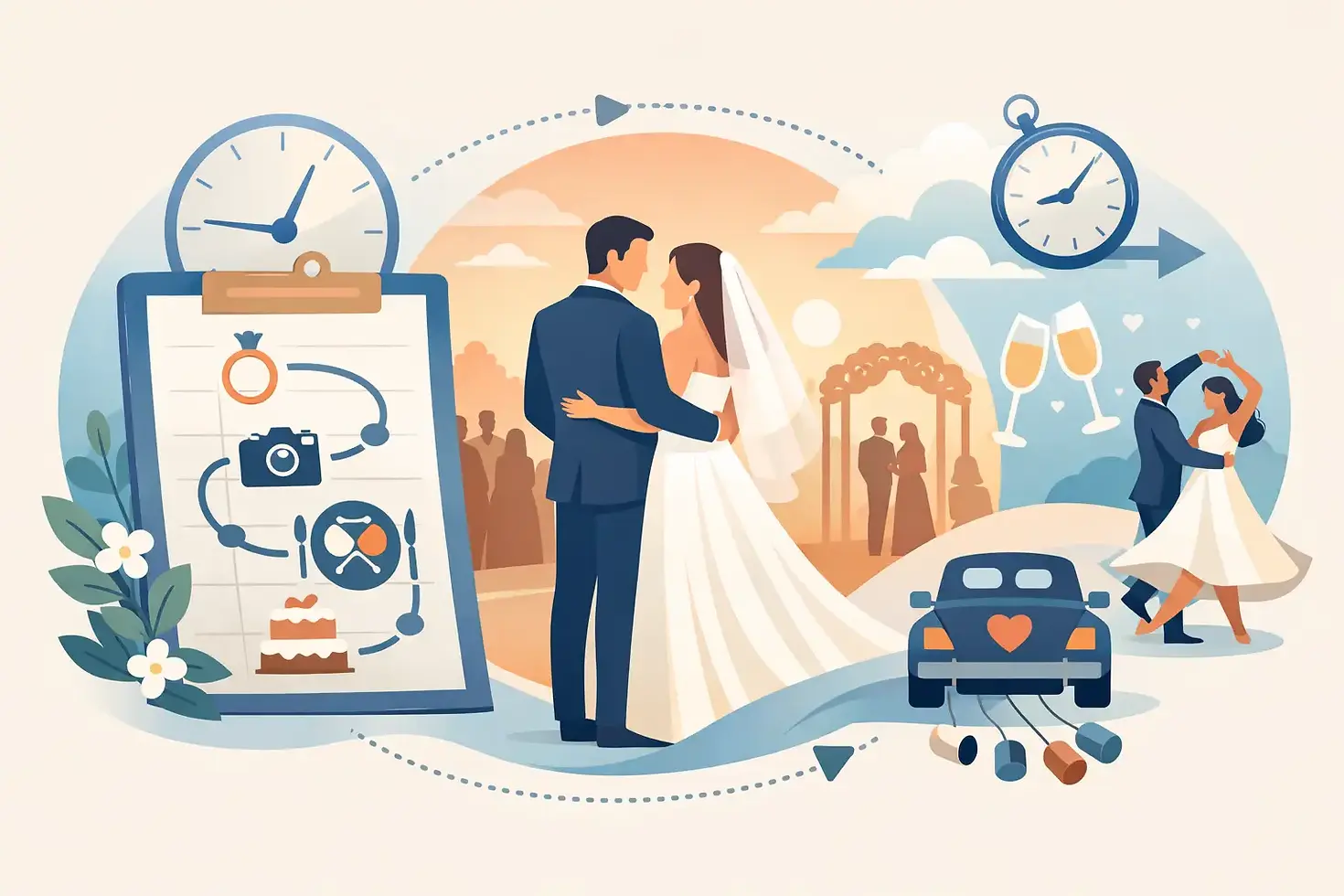
How to Build a Wedding Timeline That Flows
A wedding day can look effortless in photographs while still being thoughtfully choreographed behind the scenes. Learning how to build wedding timeline is less about scheduling every second and more about protecting the moments you traveled, gathered, and celebrated for: the quiet anticipation, the mountain-view ceremony, the long dinner conversation, and the final song surrounded by your favorite people.
For a Colorado destination wedding, timing carries even more weight. Afternoon weather, travel logistics, changing light, and the pace of a weekend away all shape the experience. A well-built timeline gives your celebration structure without making it feel rushed.
Start With the Experience You Want Guests to Have
Before assigning times to hair appointments or dinner courses, decide how you want the day to feel. Do you picture an unhurried morning with your wedding party at the lodge? A first look beside the water? A ceremony that opens to panoramic peaks in the golden hour? Or a lively cocktail hour where guests can explore the property before gathering for dinner?
Those choices should lead the schedule. Couples sometimes begin with a standard online timeline, then try to force their day into it. That can work for a traditional ballroom wedding, but a ranch celebration deserves a plan shaped around the setting. If your ceremony site is a short walk from the reception, for example, guests may enjoy a relaxed transition rather than being moved immediately into cocktail hour. If the view is a centerpiece of your day, build your portrait time around the light instead of treating photos as an interruption.
Your guest count matters, too. A micro wedding may move beautifully with fewer formal transitions and a shared family-style dinner. A larger celebration needs additional time for arrivals, seating, transportation, and dinner service. Neither is better. The right timeline is the one that makes your guests feel considered and lets you feel present.
Work Backward From Your Ceremony Time
The ceremony is the natural anchor for nearly every wedding timeline. Choose the time based on season, daylight, comfort, and the type of reception you envision.
In the Colorado mountains, a summer ceremony often works well in the later afternoon or early evening, when the light is softer and temperatures may be more comfortable. A fall celebration may call for an earlier start as the sun sets sooner. Weather can change quickly at elevation, so leave a little flexibility for guests to settle in, for a passing shower, or for portraits when the skies clear.
Once your ceremony time is set, work backward to identify what must happen beforehand: getting ready, vendor arrival, attire, first look, wedding party photos, and immediate-family portraits. Then work forward to map the evening: cocktail hour, reception entrance, dinner, toasts, dances, cake, and your send-off or after-party.
Do not assume every tradition needs its own moment. If a receiving line does not fit your vision, greet guests during cocktail hour. If you would rather join the party than disappear for a lengthy portrait session, take most family and wedding party photos before the ceremony. A timeline should serve the celebration, not a checklist.
Give the Morning More Time Than You Think
The beginning of the day sets the emotional tone. A rushed getting-ready room tends to create stress that carries forward, even at the most breathtaking venue. Plan a calm start, especially if you have a larger wedding party, detailed attire, or a hair and makeup team working with several people.
For many couples, hair and makeup begins four to six hours before the ceremony. The exact window depends on the number of services, the size of the beauty team, and whether one partner is getting ready on-site. Ask your artists to provide a service schedule, then add room for breakfast, robes or getting-ready attire, photography details, and a few quiet minutes with the people closest to you.
Have your photographer capture rings, stationery, florals, and meaningful accessories early. Put those pieces in one designated place the night before so no one is searching for vows or cuff links while the car is waiting. If you are exchanging letters or gifts, build that in intentionally. These are often the images and memories that feel most personal years later.
Plan Photos Around Light, Not Just Tradition
Mountain scenery is part of the story at a destination wedding, and your photography timeline should make room for it. The most flattering outdoor light often arrives in the hour or so before sunset, commonly called golden hour. Reserve 15 to 25 minutes during the reception for just the two of you to step away for portraits if that is meaningful to you.
A first look can make the day feel more relaxed because it allows you to complete couple, wedding party, and many family photographs before the ceremony. It also gives you a private moment to see each other before a more public entrance. But it is not the only good option. If you want the ceremony to be your first look, schedule family photos immediately afterward and expect your cocktail hour to be a little more photo-focused.
The trade-off is simple: more photographs before the ceremony generally means more time with guests afterward. More photos after the ceremony can preserve tradition, but it may shorten your time at cocktail hour. Decide which experience matters more to you, then communicate that choice clearly to your photographer and planner.
Build a Generous Ceremony-to-Reception Transition
A 20- to 30-minute ceremony can require an hour or more of transition time before dinner. Guests need time to congratulate you, find refreshments, use the restroom, admire the grounds, and move comfortably toward the reception space. This is not empty time. It is the first chance for everyone to absorb the place you chose and begin celebrating together.
Plan a cocktail hour of at least 60 minutes, and consider 75 to 90 minutes if you have a large guest count, need post-ceremony family photos, or are hosting guests across a spacious property. Offer drinks, substantial appetizers, and a clear sense of where guests should go next. Live acoustic music or a meaningful activity can make the interval feel like an intentional part of the celebration rather than a wait for dinner.
At Shaw's River Ranch, the riverfront, meadows, ponds, and mountain views can create natural moments of discovery during this part of the day. A thoughtful timeline gives guests permission to enjoy them rather than rushing from one formal event to the next.
Keep the Reception Moving Without Overpacking It
A memorable reception has rhythm. It should include moments of energy and moments when guests can simply eat, talk, and take in the evening. The best way to create that rhythm is to avoid stacking every formal event back-to-back.
A common flow is a grand entrance, a welcome or blessing, dinner, toasts, first dance, parent dances, open dancing, and cake or a late-night treat. Yet the order can shift. Some couples prefer to give toasts before dinner while everyone is attentive. Others begin dancing before dessert to bring the room to life earlier. If you are hosting a plated meal, your catering team will need clearer timing than they would for a buffet or family-style service.
Leave breathing room between events. A five-minute toast often takes 10 minutes once the speaker is introduced and glasses are raised. A first dance can lead naturally into an open dance floor, while asking guests to sit down again right after may slow the energy. Your planner, DJ, bandleader, and caterer should share the same final timeline so transitions feel polished instead of announced at the last minute.
Include Realistic Buffers
The most useful timeline rule is also the least glamorous: add buffers. Build in 10 to 15 extra minutes around arrivals, wedding party movement, family photos, and transportation. Add more if guests are traveling between lodging and the venue, if the ceremony and reception are in separate areas, or if anyone has mobility considerations.
Do not fill every buffer with another task. Those spaces are what allow a delayed zipper, a late shuttle, a sudden rain shower, or a heartfelt conversation with a grandparent to happen without unraveling the rest of the day. In a destination setting, they also give guests a gentler pace as they navigate an unfamiliar place.
Create two versions of the schedule. Your vendor timeline can be detailed, with load-in times, photo groupings, and cue notes. Your guest-facing version should be simple: ceremony, cocktail hour, dinner, dancing, and any transportation times. Guests do not need to see the machinery of the day to enjoy the magic of it.
A Sample Timeline for a 5:00 p.m. Ceremony
Here is a starting point for a summer wedding with a first look. Adjust it for your season, guest count, and personal priorities.
10:30 a.m.: Hair and makeup begins
1:30 p.m.: Photographer arrives for details and getting-ready photos
3:00 p.m.: First look and couple portraits
3:40 p.m.: Wedding party and immediate-family photos
4:30 p.m.: Guests begin arriving
5:00 p.m.: Ceremony
5:30 p.m.: Cocktail hour and remaining family photos
6:40 p.m.: Reception entrance and dinner
7:30 p.m.: Toasts and formal dances
8:15 p.m.: Golden-hour portraits
8:40 p.m.: Open dancing, dessert, and evening celebration
10:30 p.m.: Last dance or planned send-off
This is a framework, not a formula. A winter wedding may begin earlier. A micro wedding may skip a formal entrance. A weekend celebration with a rehearsal dinner or farewell brunch may let the wedding day itself feel more spacious.
The most beautiful timeline is one that leaves room for the unexpected glance across the ceremony aisle, the sunset your guests cannot stop photographing, and the unplanned laughter that becomes part of your story. Give the day a thoughtful shape, then let yourselves live inside it.


Comments